

Math anxiety is real, but it can be overcome with the right strategies | Photo: Unsplash
In This Guide
- What Is Math Anxiety? (And Why It’s Not Your Fault)
- Mindset Shifts That Change Everything
- Breathing Techniques for In-the-Moment Calm
- Small Wins: Building Confidence One Step at a Time
- Practical Strategies for Everyday Math
- Your 4-Week Confidence-Building Plan
- Resources for Ongoing Support
- Frequently Asked Questions
What Is Math Anxiety? (And Why It’s Not Your Fault)
Math anxiety is more than just “not liking math.” It is a physiological and psychological response to math-related situations that includes feelings of tension, fear, and helplessness. For many adults, the mere sight of a math problem triggers sweaty palms, a racing heart, and an overwhelming urge to escape.
Here is what you need to know: math anxiety is not a measure of your intelligence or ability. Research shows that people with high math anxiety often have normal or even above-average math potential. The anxiety itself interferes with working memory, making it harder to think clearly. You are not bad at math. Your anxiety is getting in the way.
A Note of Compassion: If you are reading this, you have likely carried the belief that you are “just not a math person” for years. That belief was never true. Math ability is not fixed. It is built through practice and confidence. And you can start building both today.
Math anxiety often begins in childhood. A bad experience with a teacher, a humiliating moment at the blackboard, or repeated messages that “some people just aren’t good at math” can create lasting fear. As adults, we avoid math whenever possible. Avoidance feels good in the short term but reinforces the belief that we cannot do math. Breaking this cycle is the first step.
Mindset Shifts That Change Everything

Shifting your mindset is the most powerful tool against math anxiety | Photo: Unsplash
Shift 1: From Fixed Mindset to Growth Mindset
Psychologist Carol Dweck’s research shows that people with a fixed mindset believe abilities are innate and unchangeable (“I’m not a math person”). People with a growth mindset believe abilities can be developed through effort (“I haven’t learned this yet, but I can”).
Try this reframe: Instead of “I can’t do math,” say “I can’t do this problem yet.” That single word creates space for learning.
Shift 2: Separate Your Worth from Your Performance
Many adults with math anxiety have tied their self-worth to getting the right answer. A wrong answer feels like a personal failure. But in mathematics, wrong answers are not failures—they are data. They tell you what you need to practice next.
Try this reframe: Instead of “I got it wrong, I’m stupid,” say “I got it wrong, which means I learned something new about where to focus.”
Shift 3: Math Is a Language, Not a Test of Intelligence
Think of math as learning a foreign language. No one expects you to be fluent after a few lessons. You learn vocabulary, then phrases, then sentences. Math works the same way. Every expert was once a beginner who made mistakes.
Try this reframe: Instead of “I should already know this,” say “I am learning a new language, and that takes time.”
Shift 4: Progress Over Perfection
Perfectionism fuels math anxiety. If you demand that every answer be correct on the first try, you will avoid anything challenging. The goal is not perfection. The goal is progress—solving one more problem than yesterday, understanding one more concept, feeling slightly less anxious.
Try this reframe: Instead of “I need to get 100%,” say “I need to learn one new thing today.”
Breathing Techniques for In-the-Moment Calm
When math anxiety hits, your body goes into fight-or-flight mode. Your heart races. Your breathing becomes shallow. Your prefrontal cortex (the thinking part of your brain) shuts down. Breathing techniques physically interrupt this response and signal your nervous system that you are safe.
Box Breathing (The 4-4-4-4 Method)
This technique is used by Navy SEALs, first responders, and athletes to calm the nervous system in high-pressure situations. It works beautifully for math anxiety.
Step 1: Inhale slowly through your nose for 4 seconds
Step 2: Hold your breath for 4 seconds
Step 3: Exhale slowly through your mouth for 4 seconds
Step 4: Hold your breath for 4 seconds
Repeat: Do this 5-10 times before starting a math task
Box breathing works because the extended exhale activates the parasympathetic nervous system (rest and digest), counteracting the stress response.
5-Finger Breathing
This technique is simple and discreet. You can do it at your desk, in a meeting, or before a test without anyone noticing.
Step 1: Hold one hand open, palm facing you
Step 2: Use the index finger of your other hand to trace up the outside of your thumb while inhaling
Step 3: Trace down the inside of your thumb while exhaling
Step 4: Repeat for each finger (index, middle, ring, pinky)
Result: You have completed 10 deep breaths
The 5-4-3-2-1 Grounding Technique
When math anxiety feels overwhelming, grounding techniques bring you back to the present moment.
5 things you can see (a pen, the window, your coffee mug)
4 things you can touch (your chair, your phone, your clothing)
3 things you can hear (traffic, typing, your breathing)
2 things you can smell (coffee, fresh air)
1 thing you can taste (water, mint, or just awareness)
This technique interrupts the anxiety spiral by engaging your senses. Once you feel grounded, return to the math problem.
Before You Start Any Math Task: Take 60 seconds to do box breathing. Set a timer if needed. This single minute can lower your heart rate, clear your mind, and improve your performance dramatically.
Small Wins: Building Confidence One Step at a Time

Small, consistent wins rebuild math confidence faster than any single big achievement | Photo: Unsplash
Confidence does not come from thinking positive thoughts. It comes from evidence. Every time you successfully solve a problem, your brain logs evidence that you can do math. The key is to start so small that success is guaranteed.
Win 1: Master Basic Arithmetic (Without Shame)
Many adults with math anxiety have shaky basic arithmetic skills. This is not a character flaw. It is a gap that can be filled.
Action: Spend 5 minutes per day on Khan Academy’s arithmetic course. Start at the very beginning. Celebrate every correct answer. Within two weeks, you will feel noticeably more confident.
Win 2: Solve One Problem Per Day
Do not try to do an hour of math. That will trigger anxiety and avoidance. Instead, commit to one problem per day. One problem is manageable. One problem is a win.
Action: Find a source of gentle math problems. Brilliant.org offers interactive problems that feel like puzzles. Math is Fun has clear explanations. Solve one problem. Then stop. That is success.
Win 3: Teach Something You Just Learned
Teaching is the highest form of understanding. When you explain a concept to someone else (or even to a rubber duck), you solidify your own knowledge and build confidence.
Action: After learning a new concept, spend 2 minutes explaining it out loud. Use simple words. Pretend you are teaching a child. The act of verbalizing builds neural pathways and confidence.
Win 4: Keep a “Math Wins” Journal
Your brain has a negativity bias. It remembers failures more vividly than successes. A wins journal counters this bias by forcing you to document evidence of your ability.
Action: Get a small notebook. After each study session, write down one thing you did well. Examples: “I remembered the order of operations.” “I caught my own mistake.” “I tried a problem I thought was too hard.” Read your wins journal whenever anxiety returns.
Practical Strategies for Everyday Math
Strategy 1: Reframe “I Don’t Know” as “I Haven’t Learned It Yet”
When you encounter a math problem you cannot solve, your instinct might be to panic or give up. Instead, pause and say: “I haven’t learned this yet.” This small phrase removes judgment and opens the door to learning.
Strategy 2: Use the 10-Minute Rule
Commit to working on a math problem for exactly 10 minutes. Set a timer. When the timer goes off, you can stop with no guilt. Most people find that after 10 minutes, they want to continue. But having permission to stop reduces the pressure that triggers anxiety.
Strategy 3: Write Down Your Anxious Thoughts
Before starting a math task, take 2 minutes to write down everything you are worried about. “I’m going to fail.” “Everyone will think I’m stupid.” “I’ll never understand this.” Research shows that writing down anxious thoughts reduces their power and improves performance.
Strategy 4: Use Estimation to Reduce Pressure
Perfectionism demands exact answers. But in real life, estimation is often good enough. Practice estimating before calculating exactly. What is roughly 15% of $47? About $7. Is 247 closer to 200 or 300? Closer to 200. Estimation lowers the stakes and builds number sense.
Strategy 5: Find Your Math Learning Style
Not everyone learns math the same way. Some people need visual explanations. Some need step-by-step written instructions. Some need real-world applications. Experiment with different resources until you find what clicks for you.
Remember: You are not broken. The way math was taught to you may have been broken. There are now countless resources that teach math in ways that make sense for adult learners. Find the one that works for you.
Your 4-Week Confidence-Building Plan
This plan requires only 10-15 minutes per day. Consistency matters more than intensity.
Week 1: Foundation and Awareness
- Day 1-2: Read through the mindset shifts above. Pick one to practice all week.
- Day 3-4: Practice box breathing for 2 minutes each morning.
- Day 5-7: Do 5 minutes of basic arithmetic on Khan Academy each day.
- Goal: Prove to yourself that you can do math without panic.
Week 2: Building Small Wins
- Continue daily breathing practice (now 1 minute before any math).
- Solve one problem per day from a gentle source like Brilliant or Math is Fun.
- Start your math wins journal. Write one win each day.
- Goal: Collect 7 wins in 7 days.
Week 3: Expanding Your Comfort Zone
- Increase to 2 problems per day (still manageable).
- Try the 10-minute rule on one problem that feels challenging.
- Teach one concept out loud to yourself.
- Goal: Experience that challenging problems become easier with practice.
Week 4: Real-World Application
- Find one real-world math task each day (calculate a tip, compare unit prices, estimate a grocery total).
- Use estimation before exact calculation.
- Write anxious thoughts before starting; write wins after finishing.
- Goal: Transfer your skills from practice to real life.
After 4 Weeks: You will have completed dozens of math problems, collected evidence of your ability, and rewired some of your anxious responses. The fear may not be completely gone, but it will be smaller. And you will know that you can do math.
Resources for Ongoing Support
You do not have to do this alone. These resources are free or low-cost and designed for adult learners.
Free Online Resources
- Khan Academy – Complete math curriculum from kindergarten through college. Start anywhere. No judgment. Completely free.
- Math is Fun – Clear, friendly explanations of math concepts with practice problems.
- Khan Academy YouTube Channel – Video explanations for every math topic.
- Coursera: Mindshift (Free) – A course on learning how to learn, including overcoming anxiety.
- Mathway – A calculator that shows step-by-step solutions. Use it to check your work, not to skip work.
Books for Math Anxiety
- Mindset: The New Psychology of Success – Carol Dweck (the foundation of growth mindset)
- A Mind for Numbers – Barbara Oakley (how to learn math effectively, written for struggling learners)
- Mathematical Mindsets – Jo Boaler (research-based strategies for building math confidence)
Apps for Daily Practice
- Khan Academy App – Free, excellent for structured learning
- Brilliant – Interactive puzzles that build intuition (free tier available)
- Photomath – Scan math problems to see step-by-step solutions (use to check, not to cheat)
- Calm or Headspace – For breathing and grounding techniques (free trials available)
Frequently Asked Questions
Is math anxiety real, or am I just making excuses?
Math anxiety is real. Neuroscience research shows that the brain’s fear centers activate during math tasks in people with math anxiety, interfering with working memory. You are not making excuses. You are experiencing a real physiological response. And it can be overcome.
Can I overcome math anxiety if I’m in my 30s, 40s, or 50s?
Yes. Neuroplasticity—the brain’s ability to form new connections—continues throughout life. Adults can learn new skills and rewire anxious responses at any age. In fact, adults often learn math more effectively than children because they have better focus, motivation, and real-world context.
How long does it take to overcome math anxiety?
There is no single answer, but most people notice significant improvement within 4-8 weeks of consistent practice (10-15 minutes daily). Complete resolution may take 6-12 months. The key is consistency, not intensity.
What if I’ve tried before and failed?
Every attempt teaches you something. The fact that you are trying again is evidence of your persistence. This time, start smaller. Use the breathing techniques. Celebrate tiny wins. Do not compare your progress to anyone else’s.
Do I need a tutor or therapist?
Many people overcome math anxiety using self-guided resources. However, if your anxiety is severe (panic attacks, inability to function at work or school), a cognitive-behavioral therapist who specializes in anxiety can be very helpful. Some tutors also specialize in math anxiety.
What about medication?
Some adults with generalized anxiety disorder find that medication reduces overall anxiety, including math anxiety. This is a conversation for a psychiatrist or primary care provider. Medication is not necessary for most people with math anxiety.
Final Thoughts: You Can Do This
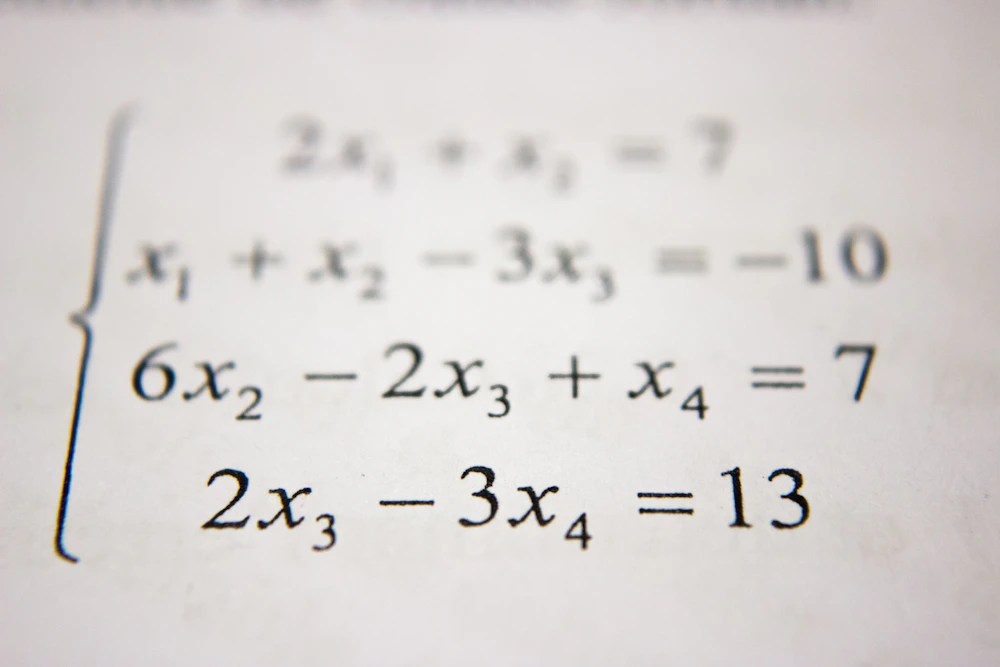
Confidence in math is built, not inherited | Photo: Unsplash
The belief that you are “not a math person” was never true. It was a story you were told, or a story you told yourself after a few bad experiences. Stories can be rewritten.
You do not need to become a mathematician. You do not need to love math. You only need to believe that you are capable of learning it. And you are. Every person who has ever mastered math started exactly where you are now—not knowing, making mistakes, feeling uncertain. The only difference is that they kept going.
Your First Step Today:
- Take three deep breaths right now (inhale for 4, hold for 4, exhale for 4).
- Write down one math win from your past (any problem you ever solved correctly).
- Bookmark Khan Academy or Math is Fun on your phone.
- Tomorrow, spend 5 minutes on one problem. That is all.
You have already taken the hardest step: you decided to face the anxiety instead of avoiding it. That takes courage. The rest is just practice. One problem at a time. One breath at a time. One small win at a time.
You can do math. You always could. Now you have the tools to prove it to yourself.
Sources: American Psychological Association, Stanford Graduate School of Education (Jo Boaler), Khan Academy. External links open in new tabs. Last updated: 2026.